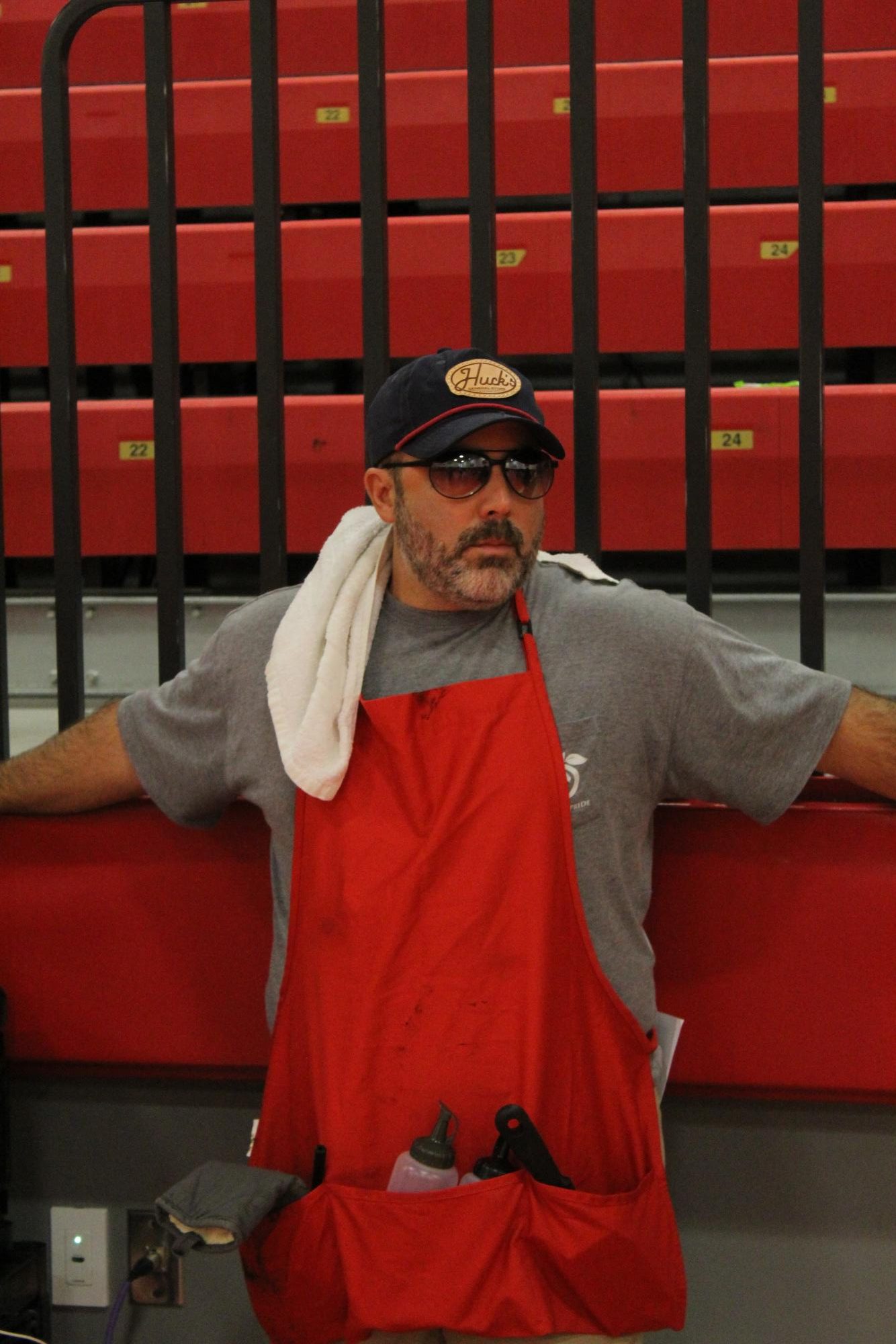
If you’ve ever had a conversation with Coach Chris Myers, you know he’s not the type to overcomplicate things. He’s straightforward, honest and grounded. When asked about what he likes to do outside of school, he didn’t hesitate.
“I like watching and playing sports, camping, hiking, grilling, just little projects around the house,” Coach Myers said, leaning back like these were the most natural things in the world.
Coach Myers does things that fulfill himself. He is certain of his interests and what he likes. No dramatic hobbies, no need to sound impressive. Just the things that make him feel like himself. College football is his favorite to watch.
“I’ll watch pretty much anything,” Myers said.
His interests go beyond the screen and the stadium, though; he likes to explore the outdoors. When it comes to camping, he’ll go anywhere as long as there’s space to breathe. The outdoors, for him, is not just a place to be; it’s a reminder to slow down. To be present. To work with your hands and be okay with the quiet. As long as he is outdoors, he is happy.
“Anywhere I can get to [is where I want to camp],” Coach Myers said. “I don’t go as often as I used to, but I go whenever possible.”
Working at Woodward wasn’t something Coach Myers had planned. Actually, it happened almost by accident. In his final semester of college, he needed to complete an internship.
“I didn’t know what I was going to do,” Myers admitted.
His father and stepmother had both taught at Woodward, so he came back and shadowed the Student Life Department. He coached lacrosse a bit during that time. And then, suddenly, an opportunity opened.
“They needed a head lacrosse coach and offered it to me,” Coach Myers said. “I was 23. I had one season of coaching experience. I don’t know that I deserved it.” He laughed. “But they offered it, and I took it.”
That decision ended up shaping his entire adult life. He has now been at Woodward for 20 years, something that surprises even him.
“It goes fast,” Myers said. “You blink, and suddenly you’re not the new guy anymore.”
If there’s one thing Myers values deeply, it’s work ethic. To him, work ethic isn’t just about grinding endlessly or being the best. It’s about consistency. Showing up. Being someone others can depend on. He said it simply: “No one’s going to fault you for working hard.”
Coach Myers also believes you have to surround yourself with people who share your morals–ones that you can count on.
“My closest friends are the ones I know will show up,” Coach Myers said. “People I can rely on. Reliability and work ethic go hand in hand.”
All that said, Coach Myers also acknowledges another reality: working hard doesn’t always guarantee success.
“You can give everything you have and still lose,” Myers said. “That’s life. A lot of people complain. But sometimes the answer is just: nobody cares, work harder.”
That mindset may sound cold at first, but for him, it completely reframes how effort and accountability work, and it’s freeing. It means the power is yours. Growing up, he didn’t have what many of his friends had. He went to Woodward, but not as one of the wealthier students. This shaped how he looks at situations because of his mom’s advice.
“My mom told me, ‘We don’t have what they have. Enjoy what you get to enjoy. But remember our reality,’” Coach Myers said.
It wasn’t said to limit him; it was told to ground him. To teach him gratitude. To show him that working for what you want matters. This altered Coach Myers’ reality.
“That shaped me a lot,” Coach Myers said. “You have to accept your reality. Be thankful for what you have before wishing for something else.”
Coach Myers also discussed success and the kind of people who are obsessed with it. He mentioned Kobe Bryant and Michael Jordan. To Coach Myers, what truly defines success goes far beyond natural ability. It comes down to how deeply someone is willing to commit.
“At the highest level, everyone is talented,” Coach Myers said. “What separates the great from the greatest is obsession. Like borderline insane obsession.”
He went on to explain where that obsession–that drive–actually comes from. Drive is something that can be developed. It comes from upbringing, choices, experiences, pain and even insecurity. It’s not random, but built. He emphasized that development ultimately comes down to the person.
“Your attitude is what you control,” Myers said. “Your passion, your discipline, that’s on you.”
When asked if he’d change anything about his life, he didn’t answer right away. That perspective also showed how he thought about his own life.
“I wish I had traveled after college,” Coach Myers said finally. “Just gone and done some cool things, seen more. I went straight to work. Bought a house. Had responsibilities fast.”
The words came with a sense of acceptance. He said it without regret, just truth. Life moves quickly, and sometimes you don’t realize how quickly until you look back. It was a lesson he wanted younger people to hear.
“When you’re young, that’s your chance,” Coach Myers said. “Because once life starts, bills, jobs, relationships, it gets harder. Not impossible. Just harder.”
That outlook influences how he approaches his work now. For him, the job is not just a paycheck. What keeps him here is the impact.
“What I get out of this is seeing students grow up,” Coach Myers said. “Seeing them come back years later, doing good things. Knowing we may have helped shape something in them, that means something.”
It’s a lesson he learned over time and takes to heart. He paused for a moment before going on with what was just the lesson of everything he said.
“Enjoy where you are,” Coach Myers said. “Stop always thinking about what’s next. You don’t get this time back.”