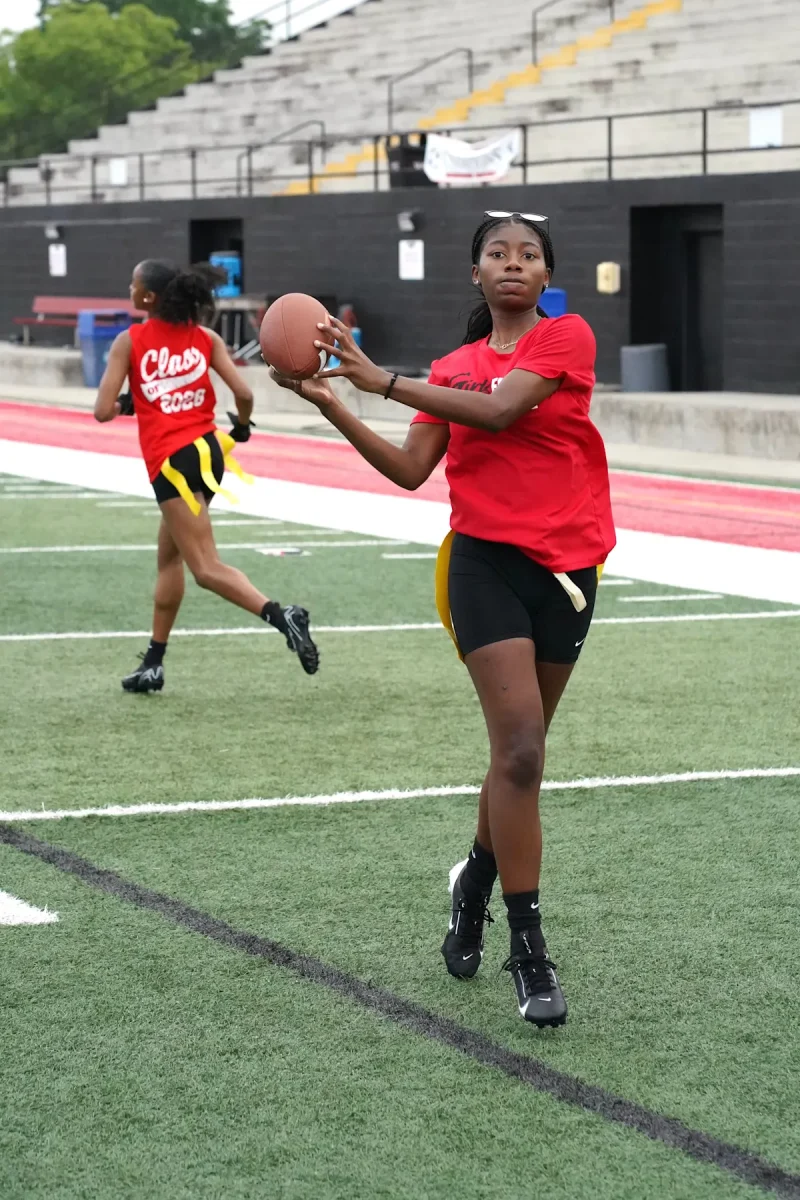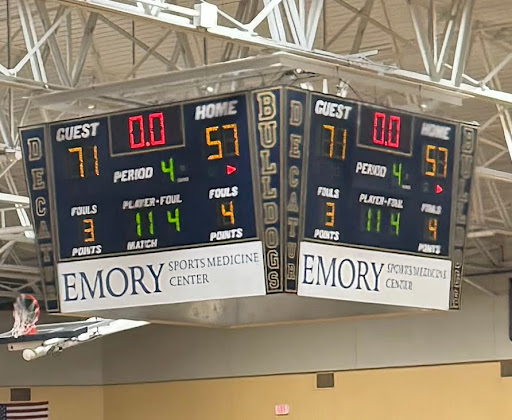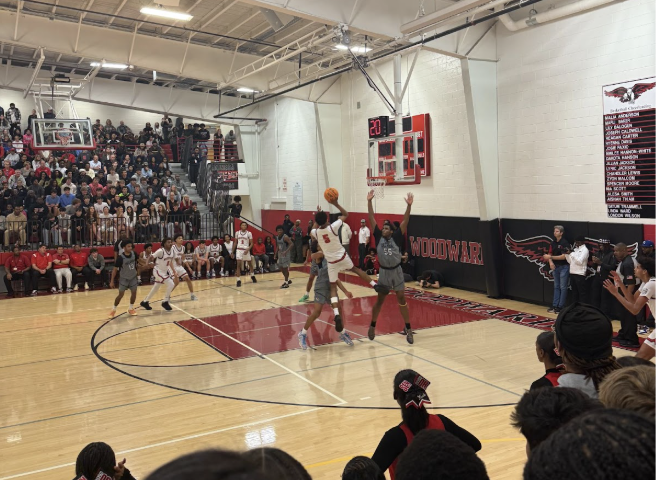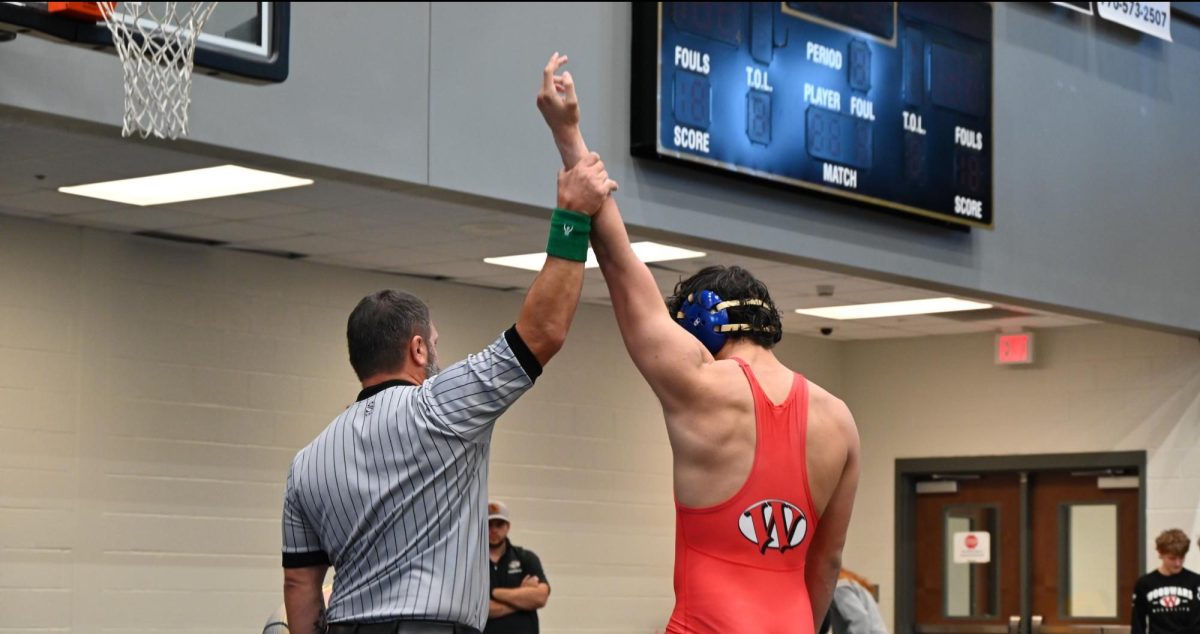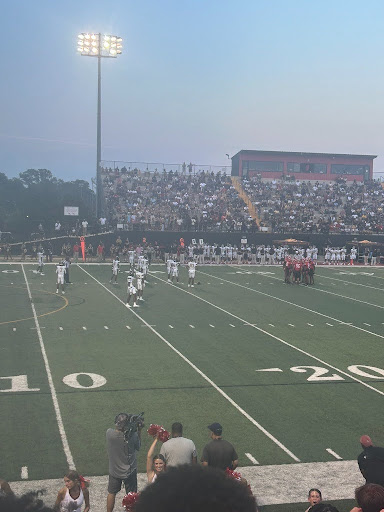
Many students have fond memories of school sports, whether that be dribbling the basketball up the court, swimming breakneck across the pool, or zooming across the cross country course. Sports are a vital part of school life. From sports, students can learn skills like responsibility and teamwork and can help students meet others with similar interests and build community. Indeed, ideally, sports are an extension of the classroom, where students can learn valuable lessons that can’t be learned through lectures and tests. Still, some people say schools put too much emphasis on athletics, which takes away from learning. And we all know the angry coach stereotype: yelling at a kid on the team for not being good enough, adding unnecessary pressure, causing them to burst into tears, with the coach saying, “Why don’t you cry to your mommy!”

Per the FAQs on the Woodward website:
“Our teams are very competitive (since 2010, Woodward has won 24 team state championships and 120 region/area championships), and our student-athletes go on to win scholarships to a wide range of colleges around the nation. More than winning though, we believe it’s important for student-athletes to build integrity, self-discipline, teamwork, and leadership skills.”
Does Woodward really live up to that final sentence? Woodward is renowned as an athletics powerhouse, and the pressure to win and live up to that winning pedigree could scare off students new to a team.
While Woodward Academy does place much value on winning, successful teams have some benefits, even at the high school level. Athletic success can bring a community together. According to an article from the National Federation of High School Associations (NFHSA), which oversees all high school sports in the country, sports can bring communities together. In 2021, the Fertile-Beltrami High School football team’s player Jude Olsen died in an accident, saddening the small town. In 2023, they made their state championship, and many local businesses funded charter buses to make sure as many residents as possible of the town could go to US Bank Stadium to watch their team play. Woodward’s athletic director Dr. Jose Fernandez sees the impact of a winning culture.
“Everyone loves a winner,” Dr. Fernandez said. “So if you have success, people are attracted to that and want to be a part of that. I think that both the same thing happens here at Woodward. You have successful programs that attract students who maybe want to be part of that success and be part of that program and help contribute to that success.”
Woodward teams have had numerous recent sporting successes such as volleyball’s state title this past year, boys’ basketball’s run to the state championship for two years in a row, and the continued dominance of the girls’ track and field program. In total, Woodward Academy has won over 80 state titles. Woodward puts a lot of effort and resources into building competitive teams, and that effort has created the desired outcome. While not every team at the school is a top team in the state level, most of Woodward’s programs regularly compete in state playoffs and are top teams in their regions.
The football team is always one of the most consistent teams in the state, and made their state championship two years ago. Woodward sports win, but at what cost? The teams are competitive, and the competitiveness and focus on winning might hinder the opportunities for less competitive athletes. Some teams have cuts for a variety of reasons. A more competitive team might have cuts in order to weed out the less competitive kids who are just there to have fun and won’t help them win. For other teams, it might just be an issue of too many kids trying out. However, sports cutting is a divisive topic that certainly contributes to the student-athlete experience at Woodward. As of the 2025-26 school year, there are 29 high school sports teams at Woodward. About 48% are non-cut, with 44% being cut, and a few that depend from year-to -year. So the data shows sports are pretty welcoming to all levels. However, looking further into it, some sports are more intense than others.


 Well, why are there cuts? At Woodward, with so many students, there can sometimes be too many players for the coaches to manage. Dr. Fernandez mentions a student:coach ratio of 10:1 is ideal. It does not need to be exactly that, as long as it is in that general ballpark. The ratio is to prevent too large of a team for the coaches to manage, just like there cannot be too many students in a classroom, or the class experience will not be effective. If a team expects to have more people trying out to where it would exceed the ratio, Fernandez will help the team bring in an extra coach. Fernandez mentions girls’ lacrosse as an example of this.
“For example, this year our girls lacrosse team [needed an additional coach],” Fernandez said. “We haven’t had a JV girls lacrosse team in the last five, six years. So what we’ve done is we went and we hired another coach to help out with that.”
Speaking of girls’ lacrosse, they have enjoyed their best season in a while, finishing third in region and ending their season with a record of 9 wins and 6 losses. Meanwhile, Coach Kaitlin Cochran is very adamant on the culture she wants to create for the team.
“We are not a cut sport,” Coach Cochran said. “We are a beginner friendly program as we are trying to increase the numbers and opportunities for girl’s lacrosse here at Woodward. Because of this there is a place for every athlete that joins the program whether that is JV or Varsity.”
One might think a sport being non-cut makes it “easy” because anyone can join. However, that is not always the case. The girl’s lacrosse team is non-cut, but they still had to work hard to accomplish what they did this season. Moreover, football is also non-cut, but is very competitive. Track and field is also one of the most successful sports teams at the school, especially the girls’ team, who have won 4 state titles since 2014. While the sport is non-cut, Coach Davis mentions anyone who tries out but who does not end up on the team self-cut, or in other words, realize they cannot handle the intensity.
“I think our success, as well as practice, has picked up,” Davis said. “It’s tough, it’s tougher, it’s harder. Not to say that it’s not fun, but it’s not like, ‘Hey, we’re gonna go out here and goof around.’ They’re working. So that’s what’s made it a little tougher.”
Some students, like Ray Liu ‘27 feel that non-cut sports are more of what you make it, and that allows everyone to have different goals. Ray is on the Cross Country and Track and Field teams. While he enjoys doing well on the cross country course, his primary goal, first and foremost, is enjoyment,
“I will say my favorite part of running is the part where we’re supporting each other,” Ray said. “Whenever we were doing a really hard workout, we would just say ‘good job’ to each other after and, like, being supportive and we’re running fast, be really encouraging, or, like, doing easy runs, we’re just chatting, talk about some school stuff.”

Sports being non-cut can also enable students to try something new. Berklee Goodman ’26 began playing soccer in 7th grade, and she was nervous before trying out.
“I only watched my siblings, so it was more nerve-wracking, like,’ hopefully I make the team, but if I make the team, like, hopefully, like people will still accept me, even though I don’t know, like, how to play,’” Berklee said. “And also I didn’t really know that many people. I think I only had one friend on the team, but then, it was a lot of people from 8th grade that were on the team, and I didn’t know them because we were in COVID, and so we never really saw the grade above.”
The girl’s soccer team was non-cut, and she made the team. Berklee continued playing for the school team all throughout Middle and Upper School, even playing varsity starting in 10th grade, as well as playing club soccer in 7th, 8th and 9th grade. Berklee appreciates the friends she has made on the team.
“It’s a very healthy environment,” Berklee said. “First of all, you’re with your friends, and especially if you’re winning games, that’s even better. But overall, if the team’s a team, then it’s just gonna make everything better. Like, you’re gonna have so much more fun. The coaches will make everything better. So really, it’s a really nice environment. It’s definitely a nice learning experience as well, when meeting new people, putting yourself out there, learning new stuff.”
Berklee also feels cutting can mean a very large team, especially this year, with the lack of a junior varsity team for girls’ soccer.
“I believe that it depends on the situation,” Berklee said. “I think cuts could be good or they could be bad depending on how they’re done. Like, this year, soccer didn’t have cuts. So we have an extremely large team. I don’t dislike it. I don’t necessarily like it, but I don’t dislike it. New people to learn, I guess, or me. But it’s unfortunate that we don’t have a JV team.”
Marissa Jones ‘27 feels similarly about cutting. She feels that if they let everyone who tries out onto the volleyball team, the team would just be too big. The smaller team means there is more personalized attention to each player, and the squad can grow closer together in the more intimate environment.
“If it wasn’t cut, I think we would have a really big team, because a lot of girls want to try out for volleyball, but I think as far as the relationships, it would be a lot different,” Marissa said. “I mean, normally the people that are on the teams are great people off the court, but I think just having such a large number definitely affects how we play on the court, because, since we are a smaller team, naturally, I think it’s just easier to build close relationships. And you know, I mean, it shows on the court too. We enjoy playing with each other, but feel like, if it was a lot larger, it would affect the dynamics of how we play, and I don’t think we would be as successful, but I mean, we were big on team bonding and culture, so I don’t think it would be a terrible issue.”
In the end, there isn’t really one right way for school sports to look. At Woodward, sports are a crucial and successful part of the school. Whether a student is trying to play in college or just looking to have fun, Woodward has sports teams that provide both. It really is just what you make of it.
“Uh, I think Woodward does a great job to achieve those goals, besides the diversity,” Ray said. “So like sports [and’ the clubs are really diverse and cover all student groups. So you can always find something you really like and join the community, join the group here and just share your same interest, same hobbies and make friends. getting involved. That was how, how, how Woodward achieves the goals because it covers every student body.”